

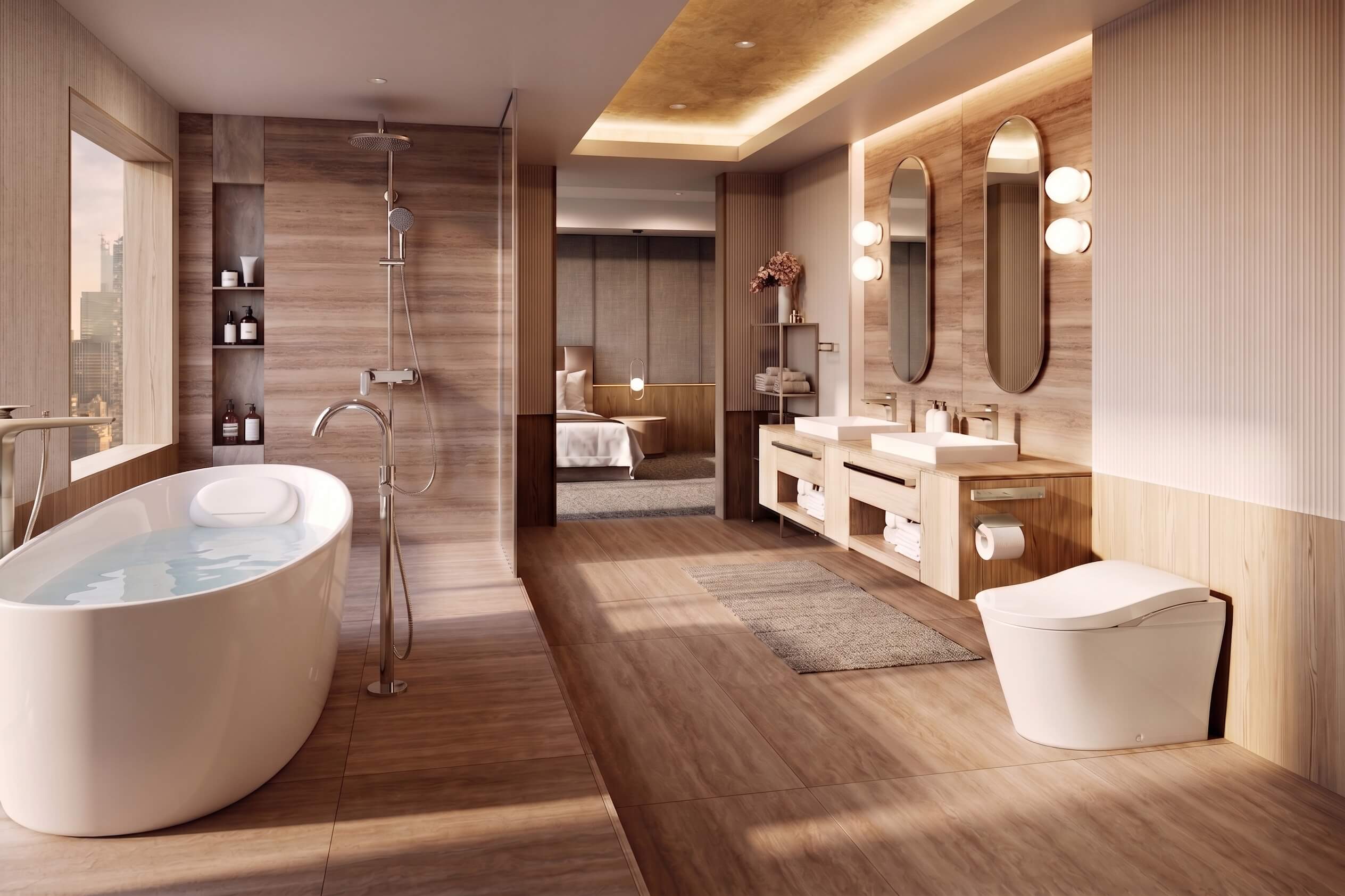
Renovating a bathroom always circles back to the same questions: which fittings actually belong in the space, how many are genuinely necessary, and what it should realistically cost. Fittings tend to stay in place for years, so choosing carefully the first time saves both money and hassle later. Breaking the process down into clear categories, realistic budgets and a few practical checks makes the whole exercise far less overwhelming.
Types of bathroom fittings
Bathroom fittings cover a wider range than most people expect, and understanding each type makes shopping far less overwhelming.
- Toilet bowls: floor-mounted, wall-hung, one-piece and close-coupled. Floor-mounted remains the most common in Singapore homes, while wall-hung is gaining ground because it leaves the floor beneath open, making it easier to mop and keep clean.
- Basins: countertop, under-counter, semi-recessed and wall-hung. Countertop basins offer the most surface space for toiletries, while wall-hung basins suit smaller HDB toilets where floor space is limited.
- Taps: short, tall and wall-mounted. The height should match the basin depth, since a tap that is too tall for a shallow basin tends to splash.
- Shower fittings: fixed heads, handheld sets, full shower sets and mixers. Fixed rain shower heads have become common in condo and landed bathrooms for their wider water coverage, while handheld sets remain more practical for compact spaces.
- Accessories: towel bars, toilet paper holders, robe hooks, shower rails, bidet sprays and mirrors. These are easy to underplan for, since they rarely come up in early renovation discussions until the bathroom is nearly finished.
What you actually need versus what is nice to have
Not every fitting on the market needs to make it into your bathroom, and separating essentials from extras early on keeps both budget and decision fatigue in check.
- Must-haves: toilet bowl, basin, tap, shower set and bidet spray. These form the core of any functioning bathroom, and skipping one usually means a second trip back to the showroom later.
- Good to have: water-efficient fittings, such as taps and shower heads rated three ticks or higher under WELS, and matching accessories across the room. Soft-close seats used to sit in this category too, but they now come standard on nearly every toilet bowl sold today, so there is little need to shop for them specifically.
- Upgrades worth considering: a washlet for added hygiene and comfort, a thermostatic shower mixer for more consistent water temperature, or a concealed cistern for a cleaner overall look. None of these are essential, so it helps to prioritise function first and aesthetics second when deciding whether to include them.
How much do bathroom fittings cost in Singapore?
Costs vary considerably depending on brand, material and technology, but having a rough range in mind makes budgeting far easier.
| Fitting | Typical price range |
| Toilet bowls | $200 to $2,000 and above |
| Basins | $100 to $1000 |
| Taps and mixers | $80 to $1,000 |
| Shower sets | $150 to $1,500 |
| Accessories (per piece) | $30 to $1,000 |
Altogether, a full bathroom fitting-out budget can range anywhere from $800 to $5,000 and above, depending on the combination of brands and features selected. A basic HDB bathroom with standard chrome fittings tends to sit toward the lower end, while a bathroom with a rimless flush toilet, washlet and premium finishes can easily reach the top of that range.
What drives the cost up or down
A handful of factors tend to explain most of the price difference between similar-looking fittings.
- Brand and country of manufacture: established international brands such as TOTO or GROHE typically cost more than lesser-known alternatives, even when the base function is similar.
- Flush or flow technology: rimless and tornado flushing system generally cost more than standard gravity flush designs, since they involve more engineering to achieve the same clean with less water.
- Finish and material quality: this matters particularly for accessories, where stainless steel or brushed finishes such as brushed gold or gunmetal cost more than basic chrome.
- Smart or sensor features: touchless flushing and automated lids add further to the price, since they involve additional electronic components.
- Buying as a set versus individually: bundled pricing from a single collection often works out more cost-effective than piecing fittings together from different brands and lines.
Things to check before buying
A few practical checks before purchasing can save both money and hassle further down the line.
- Plumbing compatibility: confirm this against your existing layout first, particularly if switching toilet or basin formats, since a mismatched outlet position can mean additional plumbing work.
- WELS water efficiency rating: products rated three ticks or higher under this official scheme generally use less water without a noticeable drop in performance. Fittings at this rating are also generally eligible for NEA’s Climate Vouchers, which you can redeem at our showroom to offset part of the cost.
- Warranty coverage and replacement parts: check both, especially for fittings you expect to keep for many years.
- Authorised dealer status: confirm your supplier carries this for the brand you are buying, since it affects both warranty validity and after-sales support.
For more specific guidance, there are a few things homeowners forget to check that go beyond the obvious, particularly around trap type and outlet compatibility.
Planning your fittings with confidence
Choosing bathroom fittings becomes far less daunting once you understand the types available, know what your household genuinely needs, and have a realistic sense of what everything will cost. A little research before shopping goes a long way toward a bathroom that works well and stays within budget.
When you are ready to see these options up close, the team at Fullsun Marketing can walk you through TOTO and LOUIS collections in person and help you settle on fittings that genuinely suit your bathroom, your household and your budget. Get in touch to arrange a showroom visit or a chat with the team before you finalise your renovation plans.